
Kite Festivals, carnivals and kite displays.
Just about every weekend somewhere around Australia on a beach or in a park there is a bunch of large and spectacular kites in the sky being flown by some of Australia’s greatest big kite makers.
Often organised by local service clubs or councils or as fund raisers by community promotions groups, kite festivals attract enormous crowds drawn by some truly spectacular giant kites.
We’ve listed in the calendar below the kite festivals we know of so if we have missed yours, or if you would like some advice on organising a kite spectacular of your own, give us a call and we can add you to the list..
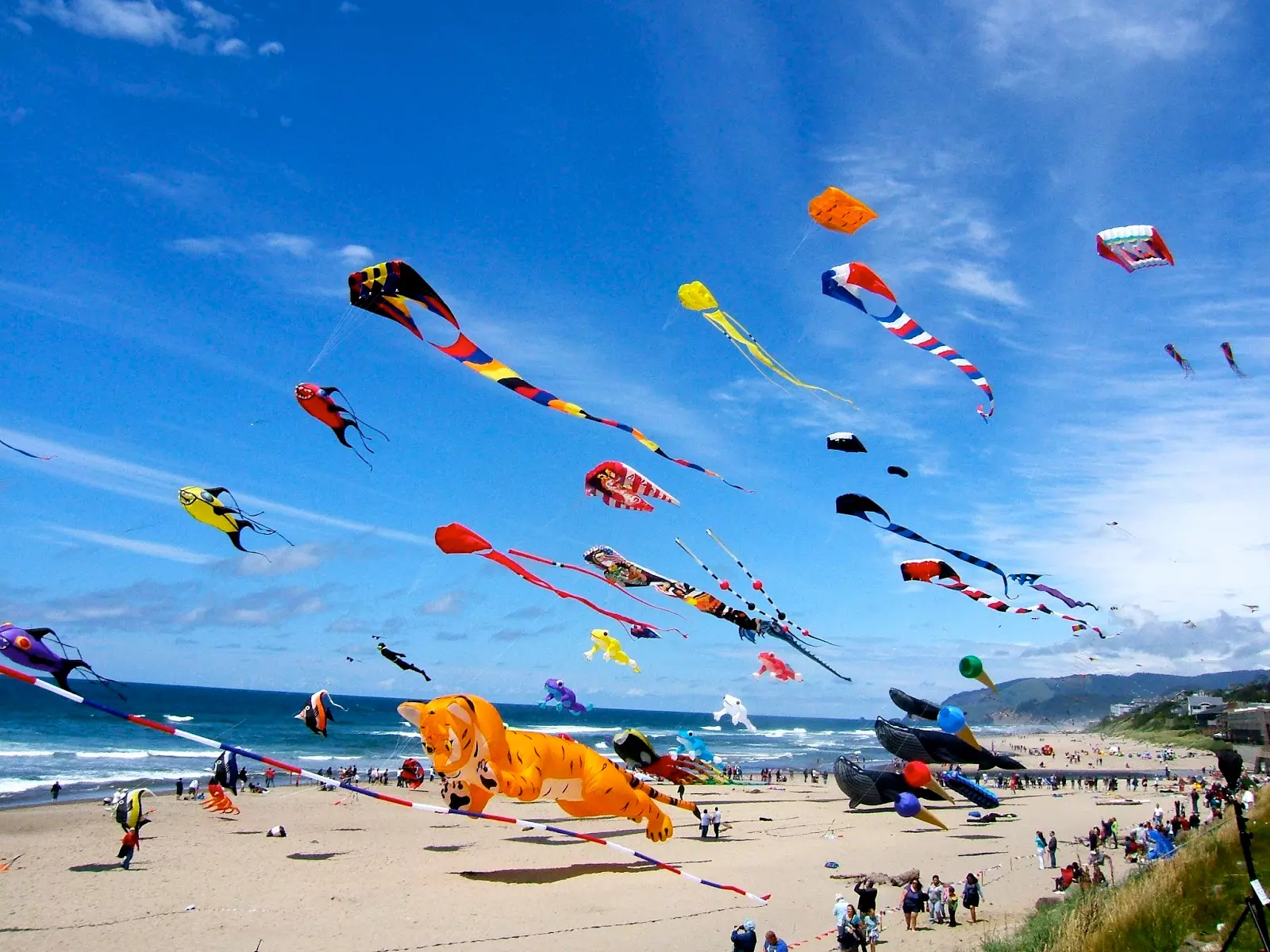
Giant kites like these are tied to trucks!
What makes for a great kite festival?
Three things make for a great kite festival…
– a sky full of magnificent kites,
– an chance for kids and families to be involved n’ fly their own kites,
– some food stalls and markets to keep the crowds entertained.
(Oh yeah, you need wind and sunshine as well!)
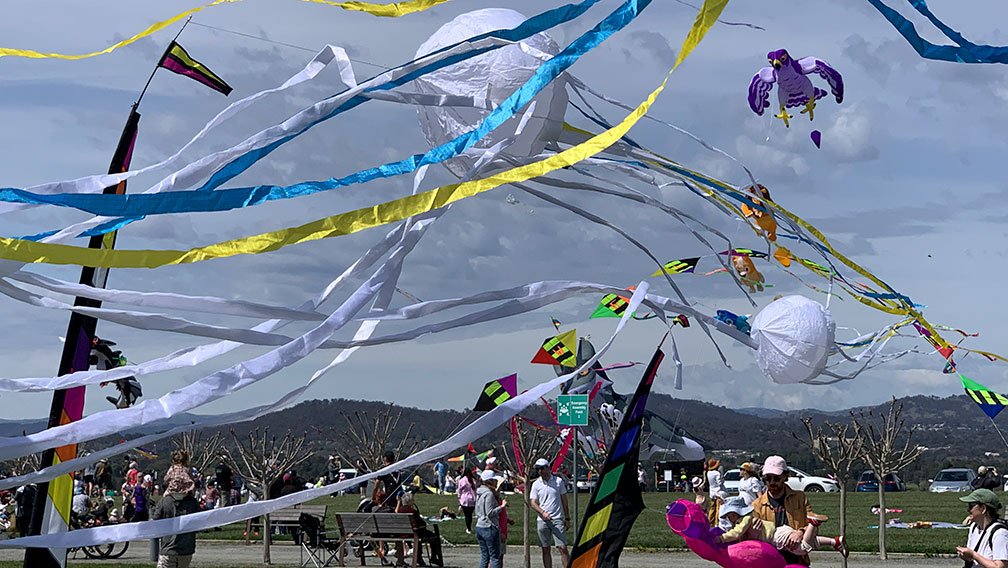
Spectacular kite displays
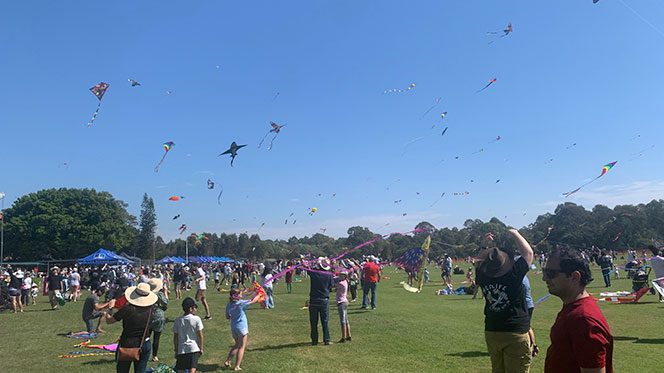
Kids and families flying their own kites

and all the fun of the fair!
The rest of this page is still in production. We hope to have it finished soon.

Plenty of wide open spaces at our beaches.

Parks are great – but watch out for the trees!
This is a good ready reference used by flyers and sailors for over 200 years
Read your instructions !!!!!
All kite designs are different so we can’t give you detailed instructions here on how to assemble because every kite assembly is unique.
We constantly see kites that have been mis-assembled because the owners (and it’s not always the dads!) didn’t read the instructions.
Whoever made your kite knows how they intended it be be assembled so read them and do what they say, not what you ‘think’.

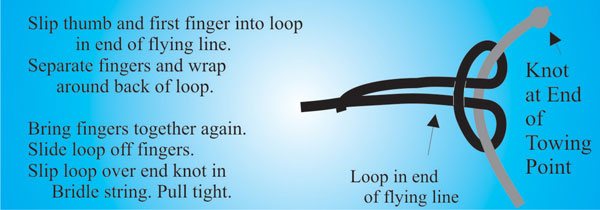
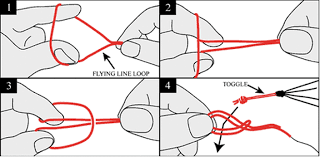
How to make a Larks Head Knot
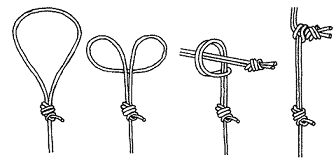
a Larks Head Knot
Just about every string used in kite flying is joined with a Larks Head Knot…if you were lucky enough to be in the Guides or Scouts you’ll know this one for sure.
Or, check out the images here to see how to do it. Once you’ve made the knot like the diagrams, simply slip the ‘Rats Tail’ …the end of the Bridle String…through the Loop of the Larks Head and pull tight.
It’s easy to do and easy to undo.
What to do with it once you’ve made it.
LAUNCHING YOUR KITE
In most winds, simply hold the kite to the breeze and the wind will take it away as you let out string.
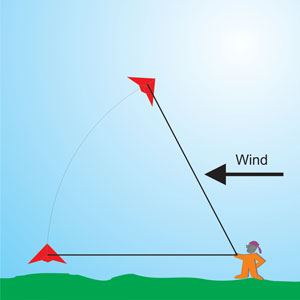
If your kite spins around and comes back down, do what we call a ‘long line launch’, have someone walk backwards about 20 metres with the kite then you just pull on the string to launch it. This way the kite will rise, the wind will catch the sail and take it skyward.
Use this same technique on days when there is very little wind. Do the ‘long line launch’ and just walk backwards into the wind. This will give your kite the best chance to rise away from the ground and get up in to cleaner air higher up.
In Medium winds, just hold the kite to the wind and ‘up, up and away’
In Lighter or Gusty winds, do a ‘long line launch’ line this.
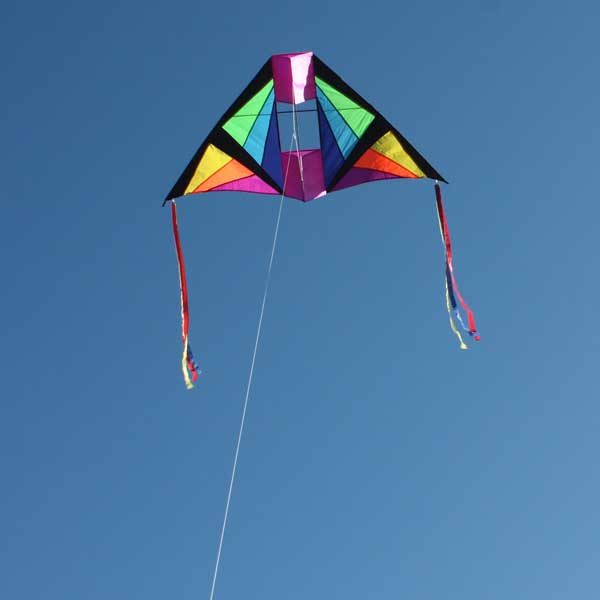
FLIGHT
Ok, you’ve got your kite into the air and it’s sitting quite still at the top of the sky. Well, that’s about it. You’ve done the hard work so now just stand back, relax and enjoy the kite!
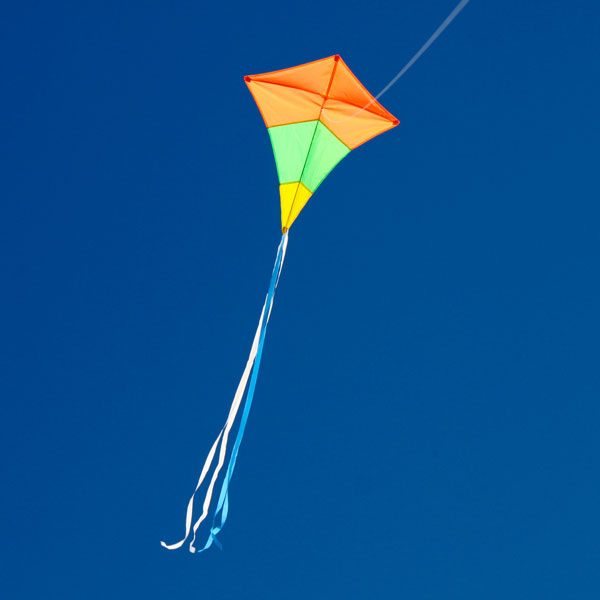
LANDING
When you’re finished flying, just wind the kite string down towards you and then you can just catch it and pack up.
If you are flying in strong winds, or with a big kite, it’s a good idea to bring the kite down ground before winding in the string. In stronger winds, there will be greater pressure on the line and, as well as being hard to wind, you can buckle or break your handle if you wind the string on under this sort of pressure..
In most wind, just wind your line on to the handle.
…but not in strong winds because this can happen.
get someone to ‘walk’ the kite down this way.
but make sure you never bunch the string, keep it laid out.
CARE & REPAIR
Most good kites now days are made from non-deterioating materials like fibreglass, nylon and carbon. A little care and attention will give you years of fun and enjoyment (but some running repairs may be necessary.)
SAIL: Sails are usually made from Spinnaker grade ripstop nylon or polyester. It is very strong and will withstand the rigours of much flying and many crashes. Repairs, if necessary, are best made with adhesive sail repair tape from your local sailboat chandlery. Stick on a patch and sew it down. If stitching needs resewing, use a similar stitch to that being repaired and use normal polyester cotton.
SPARS: All of our Single Line kites have fiberglass frames. They are very strong and unlikely to ever break but it can happen in strong winds. Replacement spars are available from us or from your local kite shop or archery shop for a few dollars each.
Take your existing spars with you so you can get an exact match. Call or email us if you get stuck finding replacement rods.
Rods can break at any time, on a seemingly gentle landing, while assembling your kite, they have even been known to break in flight!
When cutting fiberglass or carbon rod, use a hacksaw and twist as you cut…don’t cut straight through like you would a piece of timber, twist as you go so you are cutting from the outside into the inside. This will stop splinters on the bottom of your cut.
LINES: Lines will eventually wear out because of the friction caused by constant rubbing. The only solution for this is replacements but it will be heaps of hours of flying before this happens. Worry about it in a few years time.
If you fly in stronger winds (over 20 knots) be prepared for breakages! Regular twisted nylon (comes with all of our Fiberglass framed kites) can be tied back together if it breaks.
If you do want stronger lines (we don’t recommend it.) call us and we will put you in contact with your nearest supplier.
Please note that Broken Flying Lines are not covered under warranty……do not use your kite in winds too strong for your lines.
CLEANING YOUR KITE: If your kite gets dirty, just hose it with Fresh Water…pay extra attention to Joints, Holes,Tubing & Spars.
Never use brushes or abrasive cleaners on sail-cloth.
Sand and Salt are very abrasive and can wear through the cloth easily. After flying on the beach, always shake the sand off your sail and out of your bag. It’s a good idea to give your kite a quick hose in fresh water to get thew salt and sand off when you get home.
Let your kite dry before putting it back in the bag, the moisture won’t hurt it but will smell ‘like wet dogs’ when you next use it.